
GreenTravel
App State’s transportation-related activities are the third-largest contributor to the school’s greenhouse gas emissions and encompasses the following university activities:
- Fleet vehicles
- Faculty and staff commuting
- Student commuting
- University-funded air travel
- University-funded ground travel
- Study abroad programs
- Purchased travel offsets
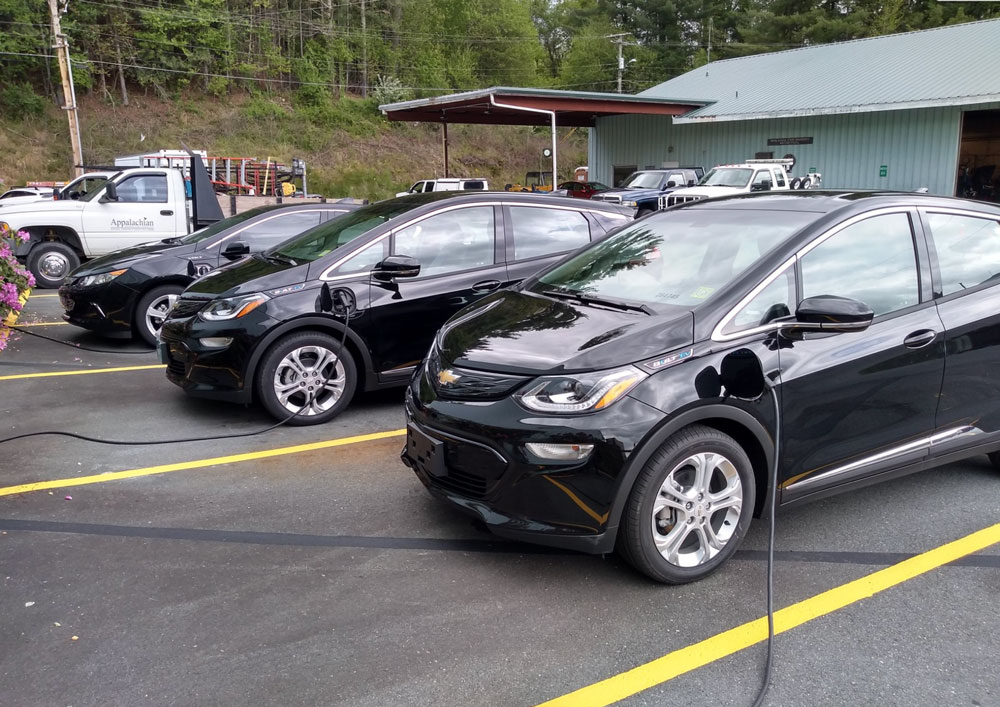
The App State motor pool has four all-electric Chevrolet Bolts and an electric-hybrid Chevrolet Volt. Charging stations for campus use are located at the Legends Lot and the Rivers Street Parking Deck.
AppalCART
AppalCART is the transportation authority that provides public transportation for Boone and Watauga County, including Appalachian State University. Students and faculty are strongly encouraged to ride AppalCART whenever possible.
Because the service is subsidized by the university, students may ride free of charge. Bus shelters are located at all perimeter parking areas, as well as many other campus locations. For additional information about AppalCART’s services, call (828) 264-2278, or visit the AppalCART web site.
Bike App
Bike App supports the Appalachian State community through education and advocacy for a more sustainable, bike-friendly campus and town. Drop by the Bike App trailer for free bicycle tunings, repairs, and educational opportunities. It is located on Rivers St across from Katherine Harper Hall.
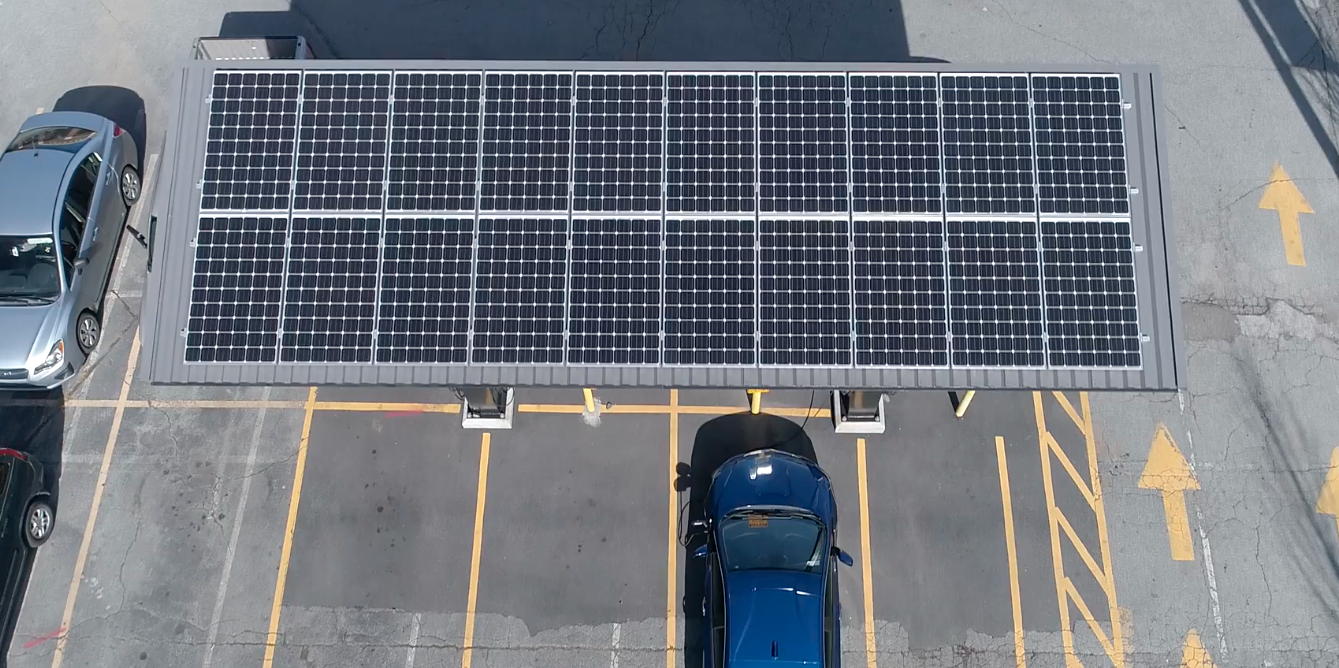
Charging stations, such as this one in Legends Parking Lot, provide infrastructure for an ever-expanding fleet of electric vehicles on campus. Currently, there are five EV charging stations on campus, four of which are solar powered (grid tied).
Walking
App State’s campus is easily walkable, just be sure to take extra care on days the walkways and rails may be icy. Downtown Boone and campus are surrounded by “the loop,” which goes around campus by way of Rivers St., Blowing Rock Road, and King Street.Most major roads in Boone have sidewalks, though they may not be easily accessible for those with mobility issues or in wheelchairs. The Greenway Trail is a fully accessible trail that is either paved or gravel surfaced and mostly flat. It follows and crosses the South Fork of the New River through meadows and forests.
Electric vehicles and charging infrastructure
App State is working to increase EV charging opportunities on campus, and there are currently five charging stations available for any student, staff, or faculty member with a valid parking pass. There is a 4-port solar charging station located in the Legends Parking lot, and a standalone station on the first floor of the Rivers Street Parking Deck. These are all first-come, first-charged. Plugshare keeps an online list of EV chargers in Boone, kept updated by EV drivers.
If you need to rent a vehicle for campus-related travel, consider checking out one of the EVs from Motor Pool.
Eco-conscious travel tips
- Take your own water bottle and food container.
- Support the local economy and culture
- Eat and shop locally when you travel
- Stay in a locally-owned accommodation
- Travel with local transport providers
- Support eco-friendly, local tour companies
Hotel tips
If you stay in a hotel, there are ways to reduce your impact:
- Hang up your towels – it’s the universal sign that they don’t need to be washed.
- Leave the ‘do not disturb’ sign on the hotel door to reduce unnecessary washing of linens, vacuuming, and the use of other chemicals for cleaning.
- Take your own toiletries (and toothbrush) to reduce the single-use hotel bottles.
- Bring your own water bottle.
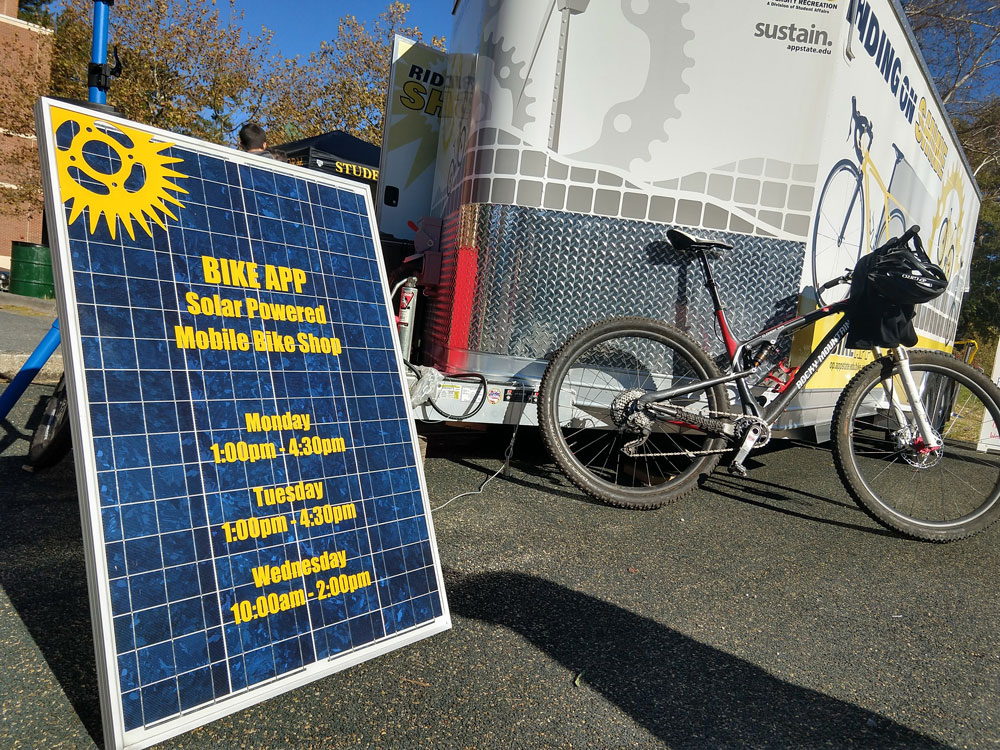
Located across Rivers St. from Katherine Harper Hall and just before the skywalk, Bike App offers free bike tuneups and repairs. The trailer is powered by solar panels, and the schedule is posted on a decommissioned PV panel.
Transportation tips
Compared with other modes of transportation, flying produces the most carbon per mile. So, when possible, opt for the bus or train – this can also be a great way to do some sightseeing en route.
If you do have to fly choose a non-stop flight. Not only is it a time saver, but a direct flight will always be more fuel efficient. Driving (especially carpooling) will always beat flying from a carbon footprint perspective.
Carbon offset programs
If you do need to fly, another means of reducing your flying footprint is to take advantage of a carbon offset program. These programs give passengers the option to invest in carbon reduction projects to help neutralize or reduce their carbon footprint caused by travel.
There are over 30 International Air Transport Association (IATA) member airlines who have introduced a fly net zero program.
Renewable biofuels
Look for airlines that use renewable biofuels. Biofuels are produced using renewable feedstock such as plant oils, agricultural waste and wood chips. Using renewable biofuel rather than fossil fuels can reduce carbon emissions by up to 80%.
Sustainability certifications
If you want to stay in an environmentally and socially responsible establishment, look for certified accommodation providers. Ask for their green certification and check whether that certifier has been approved by the Global Sustainable Tourism Council (GSTC). The GSTC and others provide a set of minimum requirements that a tourism business must meet for approval.


